


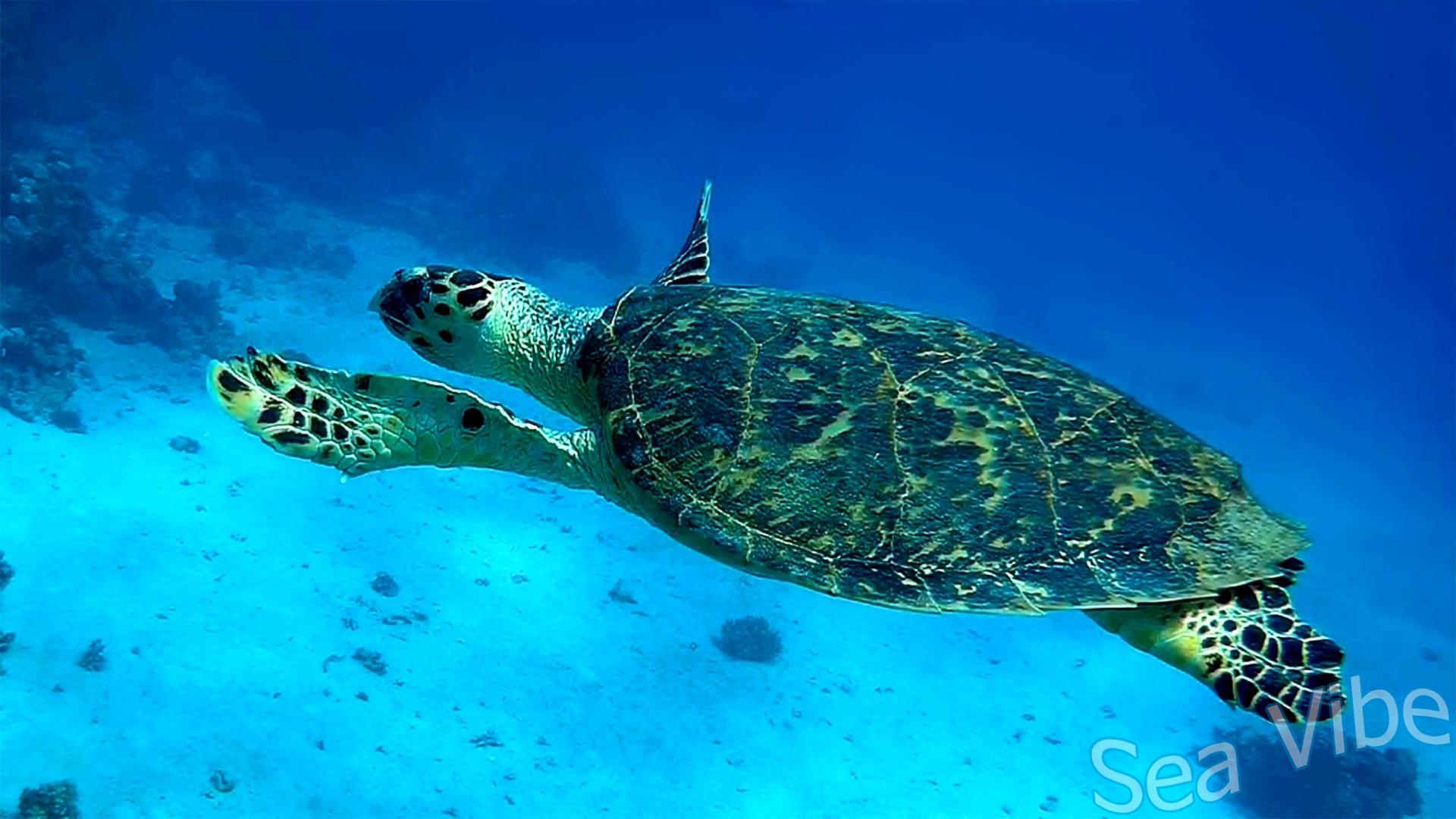
Hawksbill turtle eating coral Sarcophyton
| Category | Turtles |
| Maximum length | 114 cm |
| Class | Reptilia, Anthozoa |
| Order | Testudines, Malacalcyonacea |
| Family | Cheloniidae, Alcyoniidae |
| Genus | Eretmochelys, Sarcophyton |
| Shoot place | Ras Um Sid Bay |
| Shoot date | 2022-10-21 |
Short description
The turtle's shell has an amber background patterned with an irregular combination of light and dark streaks, with predominantly black and mottled-brown colors radiating to the sides. Its elongated, tapered head ends in a beak-like mouth. The hawksbill's forelimbs have two visible claws on each flipper. Although this turtle's primary food source is sea sponges, its diet is quite varied and includes various types of soft corals. The hawksbill turtle is one of the few marine reptiles capable of digesting toxic organisms. Sarcophyton corals produce defensive toxins (such as sarcophine) that repel most fish and predators, but the hawksbill turtle is resistant to them. With its narrow, hawksbill-like mouth, the turtle easily bites out fragments of soft coral tissue from reef crevices..
Comments ()